What Do You Do When Your Heat Pump Freezes In The Winter?
When your heat pump freezes in the winter, there are several steps you can take to address the issue. Here's what you can do:
Check the outdoor unit: First, visually inspect the outdoor unit of your heat pump. If you notice that it is covered in ice or frost, this is likely the cause of the problem. However, if you see excessive ice buildup, it could indicate a more significant issue that requires professional assistance.
Turn off the heat pump: Switch off the heat pump to prevent any further damage. This will also allow the ice to melt naturally. You can do this by turning off the system at the thermostat or the circuit breaker.
Remove snow and debris: Clear away any snow, leaves, or debris that may be obstructing the airflow around the outdoor unit. This will help improve the heat pump's performance and prevent further freezing.
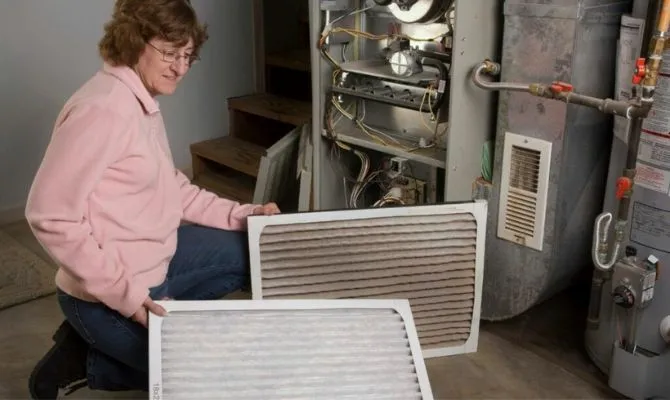
Check the air filter: Inspect the air filter inside your heat pump. A clogged or dirty filter can restrict airflow and contribute to freezing. If the filter is dirty, replace it with a clean one.
Check the indoor vents: Ensure that all the indoor vents and registers are open and unobstructed. Restricted airflow can cause the heat pump to freeze.
Wait for the ice to melt: Allow the ice to melt naturally by turning off the heat pump and waiting for the outdoor unit to defrost. Do not attempt to remove the ice by chipping or using sharp objects, as this can damage the equipment.
Restart the heat pump: Once the ice has melted and the outdoor unit is clear, turn on the heat pump again. Monitor its operation to see if it functions correctly without freezing up. If the problem persists, you may need to contact a professional HVAC technician for further inspection and repairs.
It's important to note that severe freezing or frequent freezing of the heat pump can indicate underlying issues that require professional attention. If you're unsure or the problem persists, it's recommended to contact a qualified HVAC technician for a thorough diagnosis and repair.
Improve Air Quality in Your Home
During the COVID-19 pandemic, we’ve all been spending more time in our homes than usual, meaning we’re missing out on the opportunity to enjoy fresh air.
“Fresh air?” you might say. “What about smog, pollen, vehicle exhaust and industrial pollution?” Yes, they can be irritating, but according to the United States’ Environment Protection Agency, if we’re inside, “concentrations of some pollutants are often 2 to 5 times higher than typical outdoor concentrations.”
There are all kinds of pollutants that can affect your home’s interior air quality: biological contaminants such as mold, mildew or pet dander; particulate matter from stoves or burning candles; gases emitted by products such as paint, cleaning products, aerosol sprays and flooring; and radon, a naturally occurring gas that is produced from the breakdown of radioactive metals in soil, rocks and groundwater. It’s a bit daunting when you stop to consider it.
If the air inside your home seems stuffy or is causing too much coughing or sneezing, it may be time to clean up that invisible part of your indoor environment.
Pollution Solutions
Here are some useful approaches to improving the air quality in your home:
Instal a Whole Home Air Purifier.
If you are building a new home or doing a complete HVAC renovation, it’s a perfect opportunity to instal a whole home air purifier. The purifier is actually a set of filters built into the ductwork of the home to trap airborne contaminants. They are passive systems; if the fan is running, the filters are working to clean the air. A whole home system must be installed by your HVAC professional. There are two major types: electronic filters, which use a high-voltage charge to attract and trap pollutants; and media filters, which create a physical barrier to trap contaminants.
And, if you don’t want the expense of a house-wide system, consider investing in a portable air purifier – one that is certified so it doesn’t emit ozone; check its decibel rating, too, to ensure quiet.
Keep Those Filters Clean.
If the filters in your HVAC system are clogged, they undoubtedly can’t do their job well. In addition, check the filters in other oft-forgotten places: your vacuum cleaner, your clothes dryer and your kitchen vents. Change them regularly and use only High Efficiency Particulate Air (HEPA) filters. They trap 99.97 per cent of dust particles that are 0.3 microns in diameter, including such microscopic items as mould spores and bacteria.
Clean Your Ducts.
Your ducts can be repositories for a variety of pollutants, including animal dander, dirt, dust, mould and rodent droppings, which they may then distribute around the house. If you live in an older home, contaminants may have been gathering for years. Have your HVAC ducts cleaned professionally and your air will be clearer. In addition, the ducts will work more efficiently, which may lower your utility bill.
When it’s humid outside, the humidity in your home can also rise. Damp air can be a perfect growth medium for mould, which is a major respiratory irritant. Moisture inside your home may also increase due to leakage and seepage, condensation around pipes or inadequate roof or wall insulation. Portable humidifiers can help reduce the humidity, as can better insulation around pipes and on your walls and roof. In addition, weatherstripping may prevent moist air from leaking in around windows and doors. If you find water pooling around the low points of your home, you may need to waterproof various areas. Your HVAC professional can advise you on these issues.
Improve Kitchen Ventilation.
Cooking, believe it or not, can release a lot of pollutants into the air. Even cleaner electric stoves produce smoke and particulate matter when they’re in use. To reduce the pollution produced in this busy room, turn on the range hood when you’re cooking and consider opening a window to provide extra ventilation. A kitchen is also a great location for a portable air purifier.
Clean Your Bathroom Fan.
When it removes moisture, your exhaust fan helps prevent the growth of mould and mildew. If it’s not working efficiently due to accumulated dust and grime, you may find these irritants appearing. Remove the fan’s cover a few times each year and vacuum away the debris and the dust to keep it working well.
Keep Your Home Clean.
You can check off all the tasks on this list and the air quality in your home may still be compromised, if you don’t clean regularly, allowing dust and dirt to accumulate. So, get out the vacuum cleaner and the mop and gentle cleaning solutions and establish a cleaning regimen.
Protect Your Family from Carbon Monoxide Poisoning
Undoubtedly, your home has the requisite number of smoke detectors to protect your family from house fires, but does it have an equally important carbon monoxide detector? Keeping your family safe from carbon monoxide leaks and poisoning is equally important.
Carbon monoxide (CO) is an odorless, colourless, tasteless gas that is a by-product of burning fuel, and extended exposure can lead to carbon monoxide poisoning, and, eventually, death. Any appliance or piece of equipment that burns charcoal, coal, natural gas, oil, propane, or wood can produce carbon monoxide.
During the winter when furnaces are blasting, it’s especially important to give it some consideration, because your home is closed up and there isn’t enough ventilation to allow gas to escape. Even though gas leaks from furnaces, boilers and water heaters in the home are rare, they occur every year and can be deadly. In a paper published in 2017, the British Columbia Research and Injury Prevention Unit noted that “There are more than 300 CO-related deaths per year in Canada, and more than 200 hospitalizations per year in Canada.”
What are the Symptoms of Carbon Monoxide Poisoning?
At low to moderate levels of exposure, carbon monoxide poisoning has symptoms similar to those of the flu without a fever. This makes it easy to brush off, assuming you’ll get better once the virus has taken its course. It’s worth checking with your physician to be sure that your symptoms aren’t indicators of carbon monoxide poisoning.
If you have a low to moderate level of exposure, you may experience dizziness, fatigue, headaches, nausea and shortness of breath. Greater exposure leads to more intense symptoms, such as vomiting, loss of muscular coordination, mental confusion and loss of consciousness, with death the eventual result if untreated.
If you think you or a family member may have CO poisoning, get outdoors as quickly as possible and call 911.
Preventing CO Poisoning
There are two key elements of a standard prevention routine: testing and monitoring. Each fall, it’s worth the time and effort to have your HVAC professional inspect your appliances and equipment to make sure they are running properly. Appliances and equipment that can introduce carbon monoxide into your home include backup generators, boilers, fireplaces, furnaces, gas-powered lawn mowers, ovens and stovetops, propane or charcoal grills, space heaters and water heaters. You can repair minor problems before they become threats to your health.
Equally important, you should instal carbon monoxide detectors in your home and garage. Detectors will sound a warning alarm if the concentration of carbon monoxide reaches or exceeds 15 parts per million, the level at which the World Health Organization considers carbon monoxide a health danger. The detectors ideally should be mounted on the ceiling, because the hot air that carries the gas will rise. It’s best to choose models that have batteries or a battery backup, in case of power outages.
It’s wise to instal a detector on each floor of your home, outside sleeping areas and near appliances that might leak – but not so near that false alarms are a frequent occurrence (Five metres is a good distance.). Keep them away from direct sunlight, the high humidity of the bathroom and drafty areas, since these, too, can result in false alarms.
As with fire alarms, it’s important to check the batteries on your detectors regularly. Many fire departments suggest doing so twice a year when the clocks change, and it’s a practical way to remember.
Other Precautions
One other place that requires regular attention is your gas clothes dryer. Make sure to clean out the lint trap after each use, because lint can block the dryer’s exhaust system and force carbon monoxide out into the house.
In addition, it’s important to know that you should never use combustion appliances, such as charcoal grills, in enclosed spaces, and you should not idle your car or your gas lawn mower inside a garage, even if the door is open. There is too much danger from CO. In fact, sealing the wall between your garage and your home is another precaution that is easy to take.
Have an Emergency Plan
As you would for a house fire, be sure you have an emergency escape plan for carbon monoxide leaks. Plan your escape routes in case the alarm goes off and practise them with your family. Better safe than sorry!
With care and attention, you’ll never have the need to worry about carbon monoxide poisoning, so don’t hesitate in taking the necessary preventive measures.
What is Centralized Air Conditioning
During those long, cold, snowy winter months, we long for hot, sunny summer weather. But be careful what you wish for! Sometimes extremely high temperatures and humidity can make life uncomfortable. The solution? Central air conditioning. The push of a button can make the difference between sleepless nights and hours of cool, comfortable slumber. And although we might enjoy spending our days soaking up the rays in our backyards, or on our patios and balconies, sometimes we need a little indoor relief so we can cook and relax in cool comfort. So, hooray for AC! But how does it work? Well, it’s not rocket science, but it is science – physics, in fact.
How Does a Central AC Work?
If you remember your high school physics, you will recall that gas always cools as it expands. This is the basic principle behind central air conditioning. The components in an air conditioning unit cause the expansion and condensing of a refrigerant gas, carefully controlling and directing it, resulting in cool air in your home.
Simply put, a central air conditioner system is like a giant refrigerator for your house. The system’s components perpetuate a cooling cycle, in which a cool refrigerant absorbs heat from the indoor air and expands into a warm gas. It then travels to an outdoor unit (nicely located in your backyard), where the heat is expelled and turns into a cool liquid. It then returns back indoors through ductwork to absorb more heat and the cycle continues.
Five main components work together to accomplish this operation:
The Refrigerant
The refrigerant changes from a gas to a liquid state as it collects the heat from your house and ejects it outside.
The Compressor
The refrigerant requires a compressor to pump it. Much like a heart, it pumps the refrigerant through the components in a big copper loop.
The Condenser
The condenser enables this transformation. In the condenser, the hot refrigerant vapour is cooled as it passes through the coils of the condenser. The condenser is equipped with a fan that speeds the cooling of the vapour inside the coils. As it cools, the refrigerant changes from a hot vapour to a hot liquid, then moves to the expansion valve.
The Expansion Valve
In most AC systems, the compressor, condenser coil and expansion valve are located in a condensing unit situated outside your home. The expansion valve does the actual cooling. The hot liquid refrigerant passes through the valve at high pressure on one side, and emerges as a cool low-pressure mist.
The Evaporator Coil
For the final step, this cool mist runs indoors to the evaporator coil. This component is located in a box between the furnace and the ductwork. The warm air inside your home blows across the coil and heats it, while the coil carrying the now-expanded refrigerant gas cools off the air blowing across the evaporator. This cooled air is circulated through the ductwork, cooling the air in your home.
The refrigerant then starts to heat up and boil, transforming from a cold liquid to a warm vapour (in other words, evaporation), then it goes back to the compressor and outdoor condensing unit, where it expands and cools again, continuing the cycle.
Where do you come in?
The thermostats in your home are the controls for turning the system off and on, and you control the thermostats, adjusting the temperature to your comfort level.
Keep Your Cool
Your air conditioning system is an important part of your HVAC system and requires some basic maintenance to keep running smoothly. You may have a maintenance contract with our HVAC team, in which case a technician will check, clean and repair your system at the beginning of the season, or as required if problems arise. But if you are a confident do-it-yourselfer, you can perform some of these tasks on your own:
- Monthly or seasonally, you can check the refrigerant lines. In the summer, you can turn off the water that supplies your furnace’s humidifier. In the fall, you should replace the humidifier filter and turn the water back on.
- Remember to replace the battery in your carbon monoxide detector.
- Ensure that your outdoor AC unit is on level ground and free of debris.
- Clean the AC condensate drain with a water and bleach mixture.
- And of course, always consult the manufacturer’s directions for maintenance and troubleshooting tips.
Now, sit back and enjoy the summer!
Fortis Rebates for Furnaces 2020
Fortis Rebates 2020
Furnace Replacement Program
Looking to replace your old furnace? Take advantage of different rebates for new energy efficient home heating systems! If you purchase and have an ENERGY STAR® or equivalent model installed and you can receive a rebate of up to $1000. In addition, If you also install an eligible connected thermostat, you could qualify for a $150 rebate.
It’s important to review rebate requirements before you purchase a new furnace. First of all, make sure the product you are planning to purchase is eligible for a FortisBC rebate. You will need to review all the details and/or call us to discuss your options. Second, rebates themselves are often changing. As a Fortis BC Trade Ally Member, we will ensure that you are aware of what rebates are relevant to you and how you can claim them.
Eligibility for Rebates
In general, to be eligible for rebates for a new furnace, here are some important criteria:
1. You must be a residential FortisBC natural gas customer, with natural gas as your primary source of heat.
2. Your existing furnace must be at least 10 years old and must not require repairs in excess of $1,000 (pre-tax, including parts and labour). Emergency replacements of a furnace that is not in working order or is deemed unsafe to operate by a licensed gas contractor is not eligible.
3. The furnace must be the home’s primary* source of space heating.
4. You must install an eligible ENERGY STAR furnace with a two-pipe direct vent system. You will need to verify this by including a photograph with your application.
5. Applications must be submitted within six months of the invoice date.
6. Connected thermostats must be installed by your licensed contractor at the same time as the new qualifying furnace installation.
Upgrade
Rebate
Requirements
95 to 96.9 annual fuel utilization efficiency (AFUE) furnace
$500
(with invoice dated up until September 30, 2019)
$800
(with invoice dated on or after October 1, 2019)
97 to 99% annual fuel utilization efficiency (AFUE) furnace
$700
(with invoice dated up until September 30, 2019)
$1000
(with invoice dated on or after October 1, 2019)
Connected thermostat
$150

Fortis BC Furnace Rebates
Income Qualified
Income-qualified customers who replace their old natural gas furnace or boiler with an eligible ENERGY STAR® model could qualify for up to a $3,000 rebate on a furnace, or a $2,000 rebate on a boiler.
Eligibility for Rebates
In general, to be eligible for rebates for a new furnace, here are some important criteria:
1. You must be a residential FortisBC natural gas customer, with natural gas as your primary source of heat.
2. Your combined annual household income (from all sources) must be below the maximum shown for your household size. Proof of income is required.
| Household size | Maximum household income |
|---|---|
| 1 person | $33,700 |
| 2 people | $42,000 |
| 3 people | $51,600 |
| 4 people | $62,600 |
| 5 people | $71,000 |
| 6 people | $80,100 |
| 7 people or more | $89,200 |
3. Your existing furnace or boiler must be at least 10 years old and must not require repairs in excess of $1,000 (pre-tax, including parts and labour). Emergency replacements of a furnace or boiler that is not in working order, or is deemed unsafe to operate by a licensed gas contractor, are not eligible.
4. You must install an eligible ENERGY STAR furnace or boiler with a two-pipe direct vent system, as verified by a photograph included with your application.
5. You must have purchased, installed and paid in full for your furnace or boiler on, or after, April 1, 2019.
6. Applications must be submitted within one year of the installation date.
7. Connected thermostats must be installed by your licensed contractor at the same time as the new qualifying furnace installation.
Upgrade
Rebate
Requirements
95 to 96.9 per cent annual fuel utilization efficiency (AFUE) furnace with a maximum size of 80,000 BTU/hour
$2000
Connected thermostat
$150
Other requirements for high-efficiency furnace and boiler rebates
Your new heating system must have two-pipe direct venting. One pipe provides directly vented outside air to the sealed combustion chamber, while the second sealed pipe directs exhaust gases outside. This system improves the efficiency and lifespan of the equipment as well as the comfort of your home.
For more information on replacing your old furnace or boiler, call us today!
More details can be found at
https://betterhomesbc.ca/rebates/furnace-replacement-rebate/
https://www.fortisbc.com/rebates/home/natural-gas-furnace-and-boiler-rebates
https://www.fortisbc.com/rebates/home/furnace-boiler-rebates-income-qualified
Choosing an Air Conditioner Repair Company
Before you hire an air conditioning contractor, read the tips below. It can help you to hire a reputable company that will get the job done without overcharging you.
Read Testimonials and Customer Reviews
Most of us instinctively want to let our friends and family know if we've been given good service, whether at a store, in a restaurant or a hotel. And this is no less true when it comes to the company that services or fixes your air conditioner; you probably want to let others know if you had great service and were happy with the visit. Look for testimonials and reviews from customers who can give you a good idea that a company is reliable and is a safe bet. A new company may not have any testimonials on their website yet, but of course, a lack of positive reviews and comments can also mean the company should be avoided.
Be Careful of Prices That Are Too Low
Be careful of those companies that charge you a ridiculous price for repairs even though they might have reasonable rates for a service call. These companies need to make up the costs somewhere else, so if they say they can inspect your air conditioner for free or for a low fee, just be careful, regardless of how tempting it is to save money. Most homeowners end up paying the high repair costs, as it's a lot easier to do that and use the same company that you called for the service call. After all, the technician is already in your home and is ready to carry out the repairs. If something seems too good to be true, it probably is, and that's something we all know.
And the employees probably aren't getting fairly paid if the company seems to be charging prices that just seem too low. The best technicians are attracted to those companies that pay well, and as a homeowner, it's probably worth it to you to have someone you can trust to work on your HVAC system. Your repairs "will be carried out as they should on the first visit without you having to call someone else out, and that can save you money in the long run."
Know Who Is Coming To Your House
It can be a challenge to know if you are getting good service if you don't really know one air conditioning contractor from another, or you just don't know much about a/c in general. You don't want a sloppy and botched repair job, and one way to get an idea of what to expect is to look at the make, year and overall quality of the delivery vehicles the air conditioning company uses. You may be in for sloppy and careless service if the fleet of vehicles is old and poorly maintained. On the other hand, you can probably count on better service if the company's trucks are well maintained, clean and modern.
Look For Clean, Neat and Professional Technicians
Of course, you want to have a technician visit your home who is clean, neat and professional looking, especially if you are a single mother or have kids at home. Nobody wants someone turning up to repair their air conditioner who looks dirty, unshaven, scruffy or simply unprofessional. It's important to demand clean and tidy technicians who look professional, are wearing the company uniform and carry ID if asked for it.

Standardized Pricing
You don't want an air conditioning company charging different prices for service, depending on whether you live in the ritzy area of town or on the wrong side of the tracks, and standardized pricing should be a given. And the same goes for the technician who comes to your home; just because you don't live in an expensive development doesn't mean that you should have a technician who isn't as well trained or as presentable.
Warranty
You probably don't want to work with a company that doesn't stand behind the work they carry out, and it goes without saying that a good warranty should be part of the package. Even air conditioning technicians make errors sometimes; the important thing is that any error or faulty part is covered under warranty.
Continued Training
Technicians should always be taking training throughout their career, as just like anything else, air conditioning technology keeps on changing. You want to work with a company that can accurately diagnose and fix your air conditioner, whether you just bought it yesterday or whether it's a model that has been in your home for 20 years.
Awards
Awards and recognition are always a sign that a company is top of their industry, are reliable and do a good job. Look for a company that has got some recognition.
How Often Should A Gas Furnace Be Maintained?
Here are a few of the many reasons you should complete an annual furnace maintenance:
SAFETY
Because Furnaces and Boilers burn fossil fuel, they can emit harmful gasses into your home like carbon monoxide, this can be very harmful to you and your family.
A yearly maintenance check will ensure that your furnace is appropriately exhausting these gasses outside and there are no cracks or leaks in the heat exchanger which can be very dangerous.
We also recommend installing a carbon monoxide detector close to the furnace room.
SAVINGS
If you have your furnace or boiler maintained regularly then it will continue to operate at the efficiency promised by the manufacturer, not doing this can mean that the furnace or boiler will operate below this standard meaning that its effectiveness decreases.
Essentially, this means that it costs you more to heat your home, so a furnace service saves you money over time.
LONGEVITY
The better you maintain your furnace or boiler, the longer it will last, we have seen it so many times over the years, a well-maintained system can outlast a neglected one.
It’s just like a car, the better you look after it, the longer it will last, meaning you don’t need to replace it as often which saves you money.

CATCH REPAIRS
Because our technician is checking every part in the furnace they are in the perfect position to find small or big problems, if that check-up is regular, then it allows us to get a grasp of how the furnace is behaving.
If a part looks to be wearing out or becoming noisy then we can replace the piece before it fails which is usually on the coldest day when the furnace is working the hardest, so you avoid emergency call outs or even worse not being able to get anyone because so many furnaces have broken. We will never replace a part that is not necessary and always make recommendations to you the customer and let you decide.
WARRANTY
If your furnace is still under warranty then annual furnace service is even more important, every furnace manufacturer stipulates in their manual that to maintain the warranty you must have a regular servicing for your furnace.
If you don’t and a part breaks due to lack of maintenance then the manufacturer could void your warranty meaning you are on the hook for the cost, don’t risk this happening by getting your furnace maintained every year.